



From linear supply chains to useful material cycles
Circular economy is a practical direction for chemical suppliers and manufacturers: use resources carefully, design materials for long service life, reduce avoidable waste, and help customers keep valuable substances in productive use for as long as possible.
For Kautschuk Group, this is not a slogan about replacing every material overnight. It is a disciplined way to look at formulation choices, logistics, technical service and product stewardship. Many specialty additives are used in small quantities, but they can strongly influence durability, repairability, processing efficiency and the lifetime performance of finished goods.
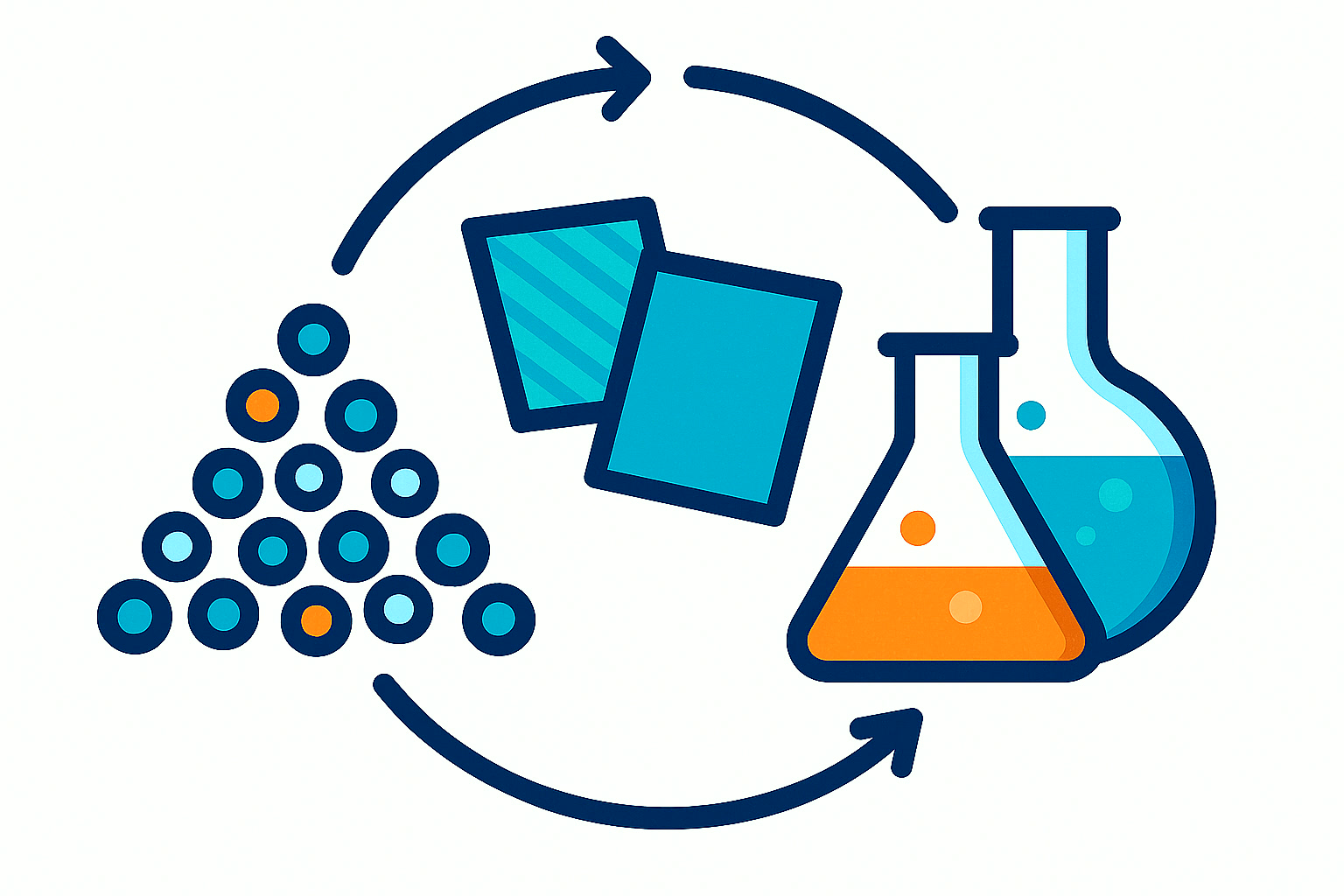
Where specialty chemicals can contribute
- Longer service life: Materials that withstand heat, moisture, abrasion or chemical stress can reduce premature replacement.
- Efficient processing: Additives that improve dispersion, curing or bonding can lower scrap rates and support more stable production.
- Responsible substitution: New systems should be evaluated for total performance, handling, availability and regulatory profile, not only for a single headline metric.
- Local technical support: Application knowledge helps customers choose the right material for the job instead of over-engineering or wasting resources.
Our role in the loop
Kautschuk Group supplies specialty chemicals to rubber, plastics, adhesives, coatings, epoxy systems, textile and civil-engineering applications. Across these fields, circular thinking often starts with concrete questions: Can the product last longer? Can the process generate less waste? Can the formulation meet its specification with fewer avoidable compromises? Can supply be made more reliable and less disruptive?
We work with customers and partners to answer these questions application by application. The best circular-economy improvements are usually specific, measurable and technically honest.
Durability is a sustainability tool
In many industrial uses, the most responsible material is the one that performs reliably for the required lifetime. A coating that protects a surface longer, a binder that stabilizes a construction material, or an additive that improves processing consistency can all reduce waste when applied correctly.
That is why we see product stewardship and technical service as part of circular economy work. Better information, careful handling, suitable storage and well-matched formulations help customers avoid unnecessary losses before a product even reaches its final use.
Energy and packaging in daily operations
Circular economy also includes the resources used around the product itself. Where practical, we support the use of renewable energy in our offices and operating environment, including electricity from renewable sources and photovoltaic systems. Energy efficiency is not a separate topic from circularity: lower energy demand and cleaner energy supply both reduce the footprint of maintaining reliable service.
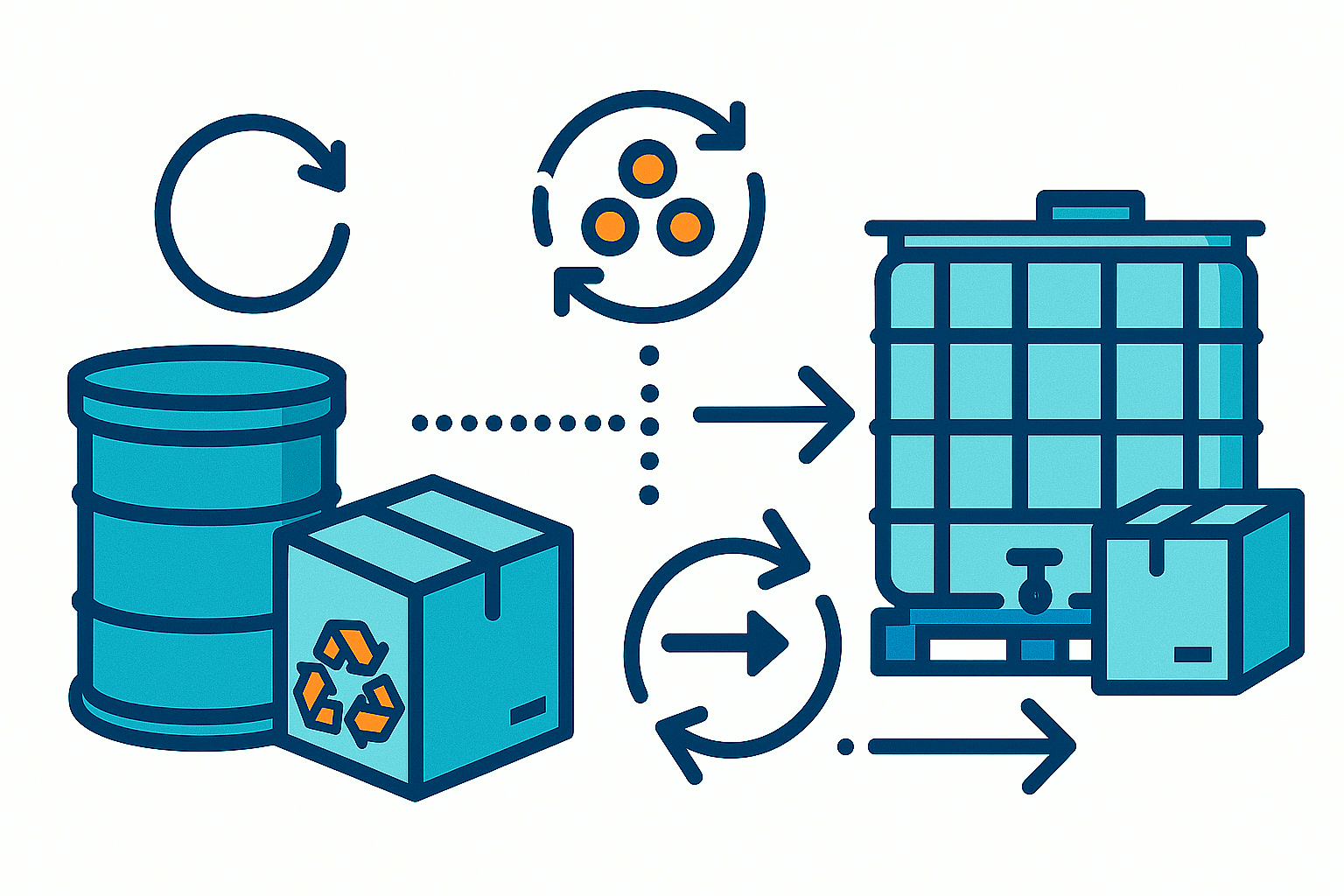
Packaging is another concrete area where careful handling matters. We prefer recyclable packaging materials where feasible, support multiple-use containers when they are suitable for the product and logistics chain, and reuse packaging material from incoming supply for internal shipments and storage when this can be done safely. These steps are modest individually, but they reduce avoidable waste and reinforce the principle that materials should stay useful for as long as possible.
Next steps
We will continue to review our product portfolio and application guidance through this lens: resource efficiency, durability, reliable supply and responsible regulatory practice. If you are evaluating a material change or looking for ways to improve an existing formulation, our technical teams can help compare options for your specific process and region.