



Operational responsibility
In specialty chemicals, responsible business shows up in ordinary work. A batch is released. A safety data sheet is updated. A supplier change is checked before an order is placed. A warehouse confirms shelf life. A formulator asks whether an alternative raw material will run in an existing process.
Kautschuk Group works at the point where chemistry, regulation and industrial application meet. Our customers use specialty additives, isocyanate crosslinkers, blocked isocyanates, epoxy and polyurethane-related materials, rubber chemicals, adhesive raw materials and coating components in demanding production environments. In those value chains, small differences in identity, documentation, storage or handling can have large downstream effects.
Good stewardship depends on disciplined routines: Qualifying suppliers before purchasing, reviewing regulatory status before market communication, keeping batch traceability intact, controlling storage before dispatch, and involving technical service before a substitution is approved.
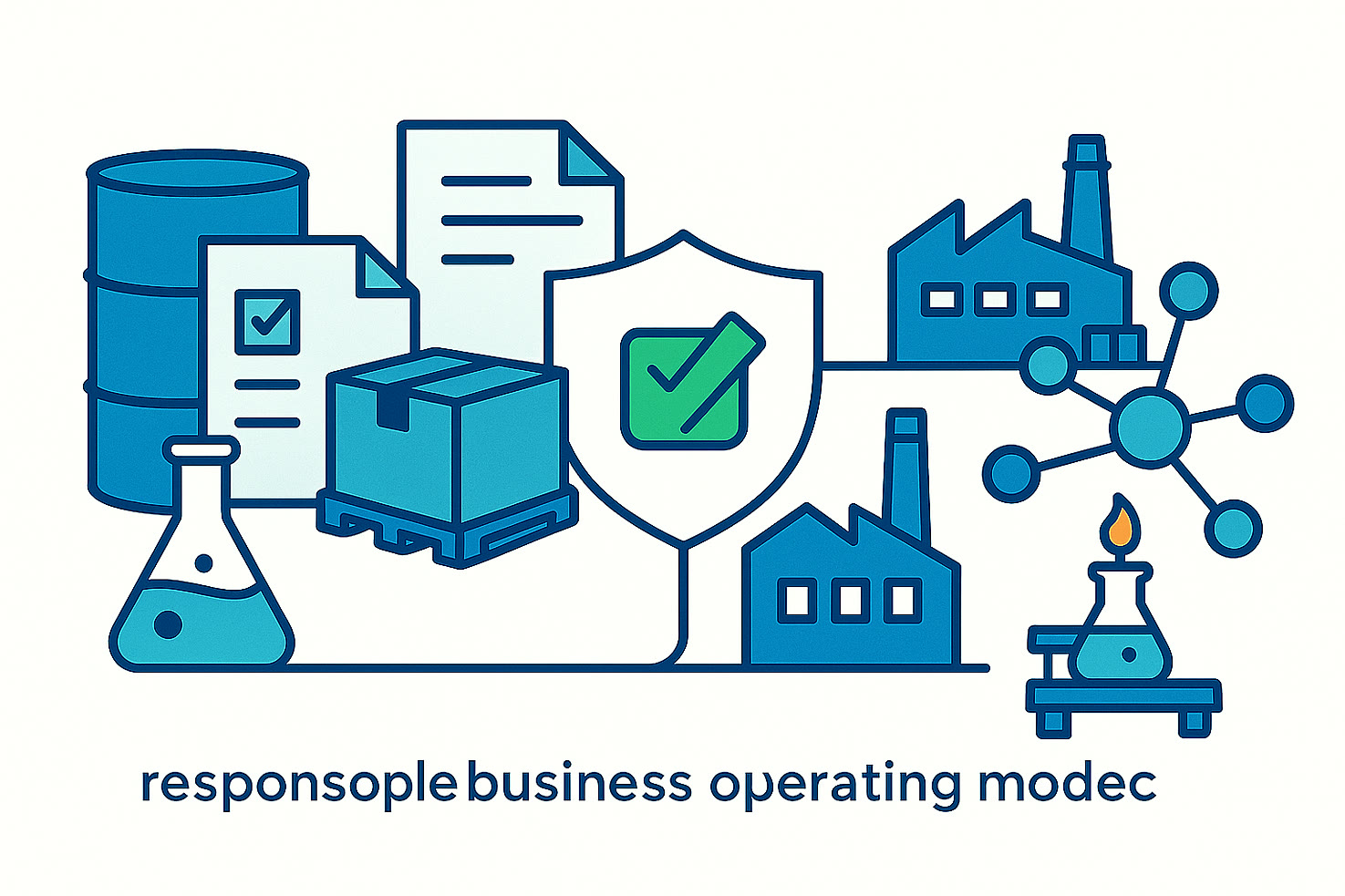
Integrated stewardship
Kautschuk Group supplies and supports materials for rubber processing, industrial adhesives, textile bonding, coatings, civil-engineering systems, plastics, epoxy systems and related specialty applications. In these markets, the product sale is only part of the customer relationship. Customers also need reliable information on composition, handling, classification, shelf life, storage conditions, performance limits and supply continuity.
That work is shared across several functions:
- Regulatory affairs: REACH, CLP/GHS communication, safety data sheet availability, SVHC and restriction screening, customer questionnaires and supplier declarations.
- Product stewardship: safe handling advice, transport and storage awareness, shelf-life discipline, packaging suitability and clear escalation when product information changes.
- Quality and traceability: batch identity, certificates of analysis where applicable, incoming-goods checks, release discipline, complaint handling and corrective-action follow-up.
- Application assurance: checking whether a crosslinker, curing agent, additive or adhesion promoter fits the customer's binder, substrate, process temperature, pot life, drying profile and aging requirements.
- Supply-chain resilience: qualified sources, regional stock planning, realistic lead-time communication and early warning when a route, raw material or documentation status changes.
The customer sees the result as one service: A material that can be specified, handled, documented and used with confidence.
Supplier qualification
Supplier management is often filed under purchasing. In specialty chemicals it is also a technical and regulatory risk-control process. A supplier can influence impurity profile, active content, particle behavior, solvent package, packaging compatibility, moisture exposure, color, viscosity, blocked-isocyanate activation behavior, crosslink density or documentation reliability. These details can matter in rubber-to-fabric bonding, solvent-based adhesive activation, 1K latent systems, epoxy flooring, coatings, sealants and technical-textile applications.
Kautschuk Group treats supplier qualification as a structured business and technical review. A meaningful assessment covers product consistency, manufacturing route, regulatory documentation, logistics reliability, responsiveness, change-control behavior and support for corrective action. Higher application or regulatory exposure calls for deeper review: more documentation, more sampling, more application testing or a clearer escalation path.
The same discipline applies to alternatives. A chemically related product may still need comparison of active substance, solvent or carrier, NCO or epoxy equivalent behavior, solids content, viscosity, particle size, moisture sensitivity, cure profile, deblocking behavior, adhesion performance, heat aging, hydrolysis resistance, chemical exposure and customer-specific approval status.
Assurance through documentation
For industrial customers, documentation is part of product usability. Missing or unclear safety, regulatory and quality information can delay production just as surely as a missing shipment.
This is especially relevant when materials enter regulated or quality-sensitive value chains. Customers may need safety data sheets, technical data sheets, certificates, REACH or SVHC statements, food-contact or automotive-related declarations where relevant, transport information, shelf-life guidance, country-of-origin information, or supplier-code responses. The exact package depends on the material, customer and application. The rule is simple: documentation has to be controlled, findable and consistent with the delivered product.
Good records also improve internal decisions. If a supplier changes a manufacturing site, if a classification changes, if a raw material becomes restricted, if a packaging format changes, or if a customer complaint identifies an application risk, the record shows what changed, who is affected and which information must be updated.

Stewardship for reactive systems
Many materials used by our customers are valuable because they are reactive. Polyisocyanate crosslinkers, blocked isocyanates, epoxy curing systems, adhesion promoters and specialty additives can improve heat resistance, cohesive strength, hydrolysis resistance, chemical resistance, bonding performance, processing stability and service life. The same chemistry needs careful handling and clear product positioning.
That includes communication on moisture sensitivity, ventilation, personal protection, solvent handling, storage temperature, shelf life, opened-container management, pot life, activation temperature, cure schedule and disposal considerations. It also includes practical limits. Final performance depends on formulation, substrate preparation, film formation, drying conditions, mixing accuracy, catalyst package, humidity, production rhythm and aging profile.
Responsible product support sets out the opportunity, the controls and the tests needed before production release.
Application-led support
Technical service is a practical way to reduce waste and avoid compliance problems. A better-matched additive can reduce scrap. A stable process window can reduce rework. A correctly selected crosslinker can improve service life. A careful substitution test can prevent disruption in the customer's plant. A timely regulatory answer can avoid unnecessary inventory holds.
In rubber, adhesives, coatings, epoxy systems and textile bonding, performance is rarely determined by one data-sheet value. It depends on the complete system: binder chemistry, filler package, solvent or water phase, substrate surface, drying or activation profile, processing speed, open time, line temperature, humidity, storage history and final-use exposure. Kautschuk Group helps customers ask the right technical questions before a material is locked into production.
For example, an adhesive producer evaluating a latent crosslinker may need to balance one-component storage stability against heat-activation profile and final bond resistance. A rubber processor may focus on dispersion, scorch safety, aging behavior and compatibility with existing compounding routines. An epoxy or coating customer may prioritize cure development, chemical resistance, substrate preparation and regulatory documentation. This is where responsible business becomes visible in production.
Working standards
Environmental management, labor expectations, anti-corruption, data protection and fair business conduct only work when they influence daily decisions. In our context this includes supplier expectations, contractor behavior, transport and packaging choices, waste avoidance, energy awareness, lawful trade, accurate product communication, confidential handling of customer data and clear reporting channels.
The purpose is repeatability: Defined responsibilities, practical procedures, accessible records and a willingness to correct gaps. A supplier declaration that cannot be found, a customer answer that depends on memory, or a material change that is not communicated through the right channels points to a weakness in the operating system.
Continuous improvement
Many useful improvements are small. They may involve updating an SDS, correcting a data field, improving a supplier questionnaire, checking a batch record, reviewing a vulnerable transport route, clarifying a storage instruction, documenting a complaint investigation, training a team, or making a regulatory answer easier to verify.
Over time, these controls create a more reliable organization. They also strengthen resilience. When information is current, responsibilities are clear and technical knowledge is close to the customer, the company can react faster without losing discipline.
Customer assurance
Customers should expect more than a material number and a delivery date. They should expect realistic communication, product-specific documentation, application-aware support, supplier and logistics discipline, and early discussion of risk.
For Kautschuk Group, responsible specialty chemistry means managing the business to that standard every day.