



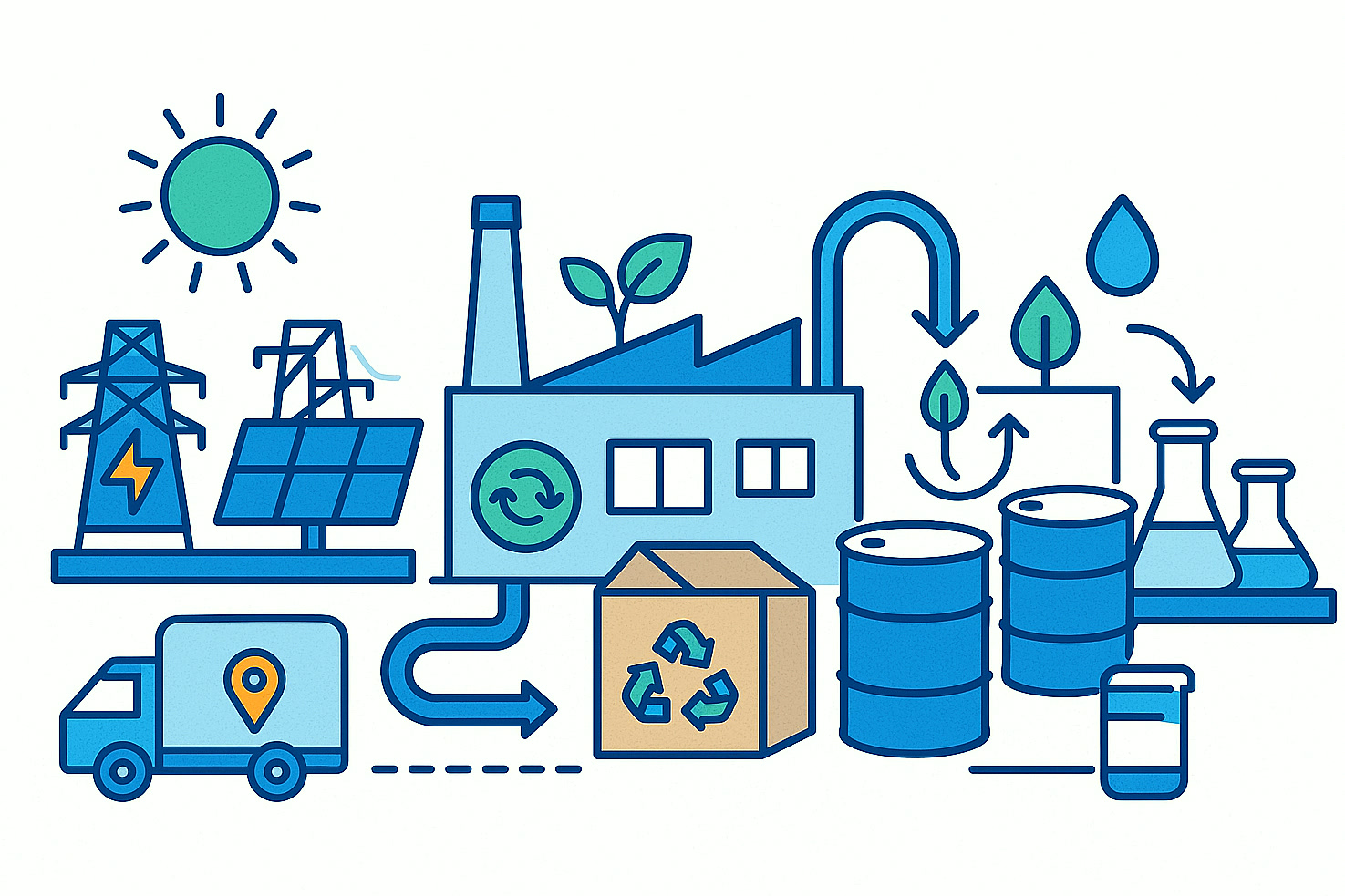
Environment as an operating discipline
Environment is the environmental pillar of the Kautschuk Group sustainability strategy. It covers the way we use energy, water, raw materials, packaging and logistics capacity across production, offices, storage, technical service and customer support.
Isochem Kautschuk-GmbH maintains an environmental management system certified to ISO 14001:2015. The system defines responsibilities, objectives, audit follow-up, corrective action and management review.
Our aim is to reduce avoidable environmental impact while maintaining safe, reliable supply of specialty chemicals and technical services. In practice, this means focusing on resource efficiency, responsible handling, suitable packaging, careful storage, product stewardship and continuous improvement.
Energy and emissions
We work to reduce energy demand where practical through efficient processes, careful operation of equipment, responsible use of office and IT infrastructure, and digital workflows that reduce unnecessary travel or printing. Where feasible, we support renewable energy sources, including photovoltaic systems and electricity from renewable sources.
Energy efficiency is not only an office topic. Production, warehousing, temperature-controlled storage, logistics and technical service all influence the environmental footprint of our activities. Improvements are evaluated in the context of reliability, safety, quality and customer requirements.
We also monitor opportunities to reduce indirect emissions through better shipment planning, qualified logistics partners, consolidated deliveries, local warehousing where appropriate and reduced emergency shipments.
Pollution prevention
Pollution prevention covers air, water and soil as well as operational nuisances such as odor, dust, noise and light where relevant. Chemical operations require attention to storage compatibility, containment, ventilation, transfer procedures, cleaning, maintenance and incident readiness.
Our environmental management approach includes preventing spills and releases, maintaining suitable containment, handling hazardous substances according to SDS requirements, and reviewing any non-conformance through corrective action. If operations or local requirements make emission monitoring, wastewater monitoring or other environmental measurements necessary, these are managed within the applicable permits and legal framework.
Water, wastewater and process resources
Water is used differently across offices, production-related activities, maintenance and technical work. We aim to use water responsibly, avoid unnecessary consumption, and consider water-efficient maintenance or process choices where feasible. Rainwater or graywater concepts can be useful where they are technically appropriate and safe.
Wastewater handling is managed according to site conditions and legal requirements. Where wastewater treatment, monitoring or external disposal is required, the aim is to prevent harm to people, local water systems and the surrounding environment. For new projects or relevant site changes, water availability, wastewater route, flood exposure and local water-risk conditions should be considered early.
Resource efficiency also means using raw materials carefully. Specialty additives are often used in small quantities, but they can have a large effect on durability, processing stability and final product performance. Good product selection and technical support can therefore reduce waste in customer processes as well as in our own operations.
Waste, packaging and circular economy
We apply the hierarchy of reducing waste at source, reusing materials where safe, recycling where suitable, and disposing of the remainder through compliant routes. Waste reduction starts with good purchasing, correct storage, batch control, clean handling and avoiding unnecessary off-specification material.
We prefer recyclable packaging materials where feasible and support multiple-use containers when they are suitable for the product, safety requirements and logistics chain. Packaging material from incoming supply is reused for internal shipments and storage when this can be done safely and cleanly. Packaging return or take-back concepts may be used where product compatibility, cleanliness and transport rules allow it.
Hazardous waste requires particular discipline. Contaminated packaging, residues, absorbents, process waste and unusable chemicals must be segregated, identified and transferred only to suitable licensed waste-management partners where required. Waste stream mapping and periodic review help identify avoidable losses, excessive packaging use and opportunities for safer reuse or recycling.
Waste reduction also includes practical office behavior: avoiding unnecessary printing, using digital documentation where appropriate, and keeping work processes efficient without compromising traceability or regulatory requirements.
Chemicals, refrigerants and hazardous substances
Chemicals are stored, labelled, handled and transported according to their classification, SDS requirements and applicable regulations. Product compatibility, temperature sensitivity, ventilation, containment and personal protective equipment are considered as part of safe handling.
Where refrigeration, air-conditioning or process cooling systems are used, refrigerants should be managed responsibly. During maintenance or equipment replacement, preference should be given to compliant systems and lower-impact refrigerant options where technically and commercially feasible.
Biodiversity and site selection
Most of our direct environmental influence is operational rather than land-intensive. Nevertheless, new sites, substantial site changes and relevant projects should consider protected areas, sensitive habitats, nearby water bodies, flood risk and local community concerns. Early screening helps avoid avoidable biodiversity or ecosystem impacts and supports better permitting and stakeholder dialogue.
Logistics and supply-chain efficiency
Logistics is part of environmental sustainability. Consolidated shipments, suitable storage, reliable forecasting and regional supply options can reduce emergency shipments and unnecessary movement. At the same time, chemical logistics must always respect safety, compatibility, packaging, labelling, documentation and regulatory requirements.
We expect qualified carriers and logistics partners to apply appropriate controls for chemical transport, including suitable packaging integrity, GHS/CLP-aligned hazard communication where applicable, vehicle and container suitability, and incident response capability. A resilient supply chain can also be an environmental tool: avoiding last-minute replacements, failed production runs and emergency logistics helps customers keep processes stable and reduce avoidable waste.
Product stewardship and customer support
Environmental responsibility does not stop at our site boundary. We support customers with product information, SDS, TDS, handling guidance, regulatory documentation and application knowledge so that materials are selected and used appropriately.
Durable products and stable processes can reduce waste over the life of an application. A coating that protects longer, an adhesive bond that resists heat and moisture, or an additive that improves processing consistency can all contribute to resource efficiency when used correctly. Product stewardship also includes responsible labelling, safe-use information, end-of-life considerations and response procedures for customer questions or complaints.
Supplier and contractor expectations
Suppliers and contractors influence our environmental footprint through raw materials, packaging, logistics, waste handling and services. We therefore include environmental expectations in supplier qualification and review, especially for suppliers handling chemicals, hazardous waste, logistics or other higher-risk activities.
Read our Supplier Audit Guideline
Continuous improvement
We will continue to review our environmental practices across ISO 14001, energy, water, pollution prevention, waste, packaging, logistics, product stewardship and supplier management. Improvements must be technically sound, safe and compatible with customer requirements. Our focus is measurable, practical progress rather than slogans.